Locations and routes
Two practical places to find lithium
Japanese guides and Steam Community separate lithium into an early free pickup and dangerous deposits for later farming. Use landmarks, direction, and depth together; a distance alone is not a fixed coordinate after an Early Access patch.
Use the Lifepod as your anchor
Check the compass and keep the Lifepod or a beacon as your return reference. Lithium runs combine depth, heat, and oxygen, so avoid a detour just to open the map.
Travel south-southwest to the Great Jaw
Head roughly 280–350 m south-southwest using the crater edge and colony wreckage as landmarks. Guides report one free piece on a table near the ruined colony, inside a small shell.
Treat the Great Jaw interior as a short raid
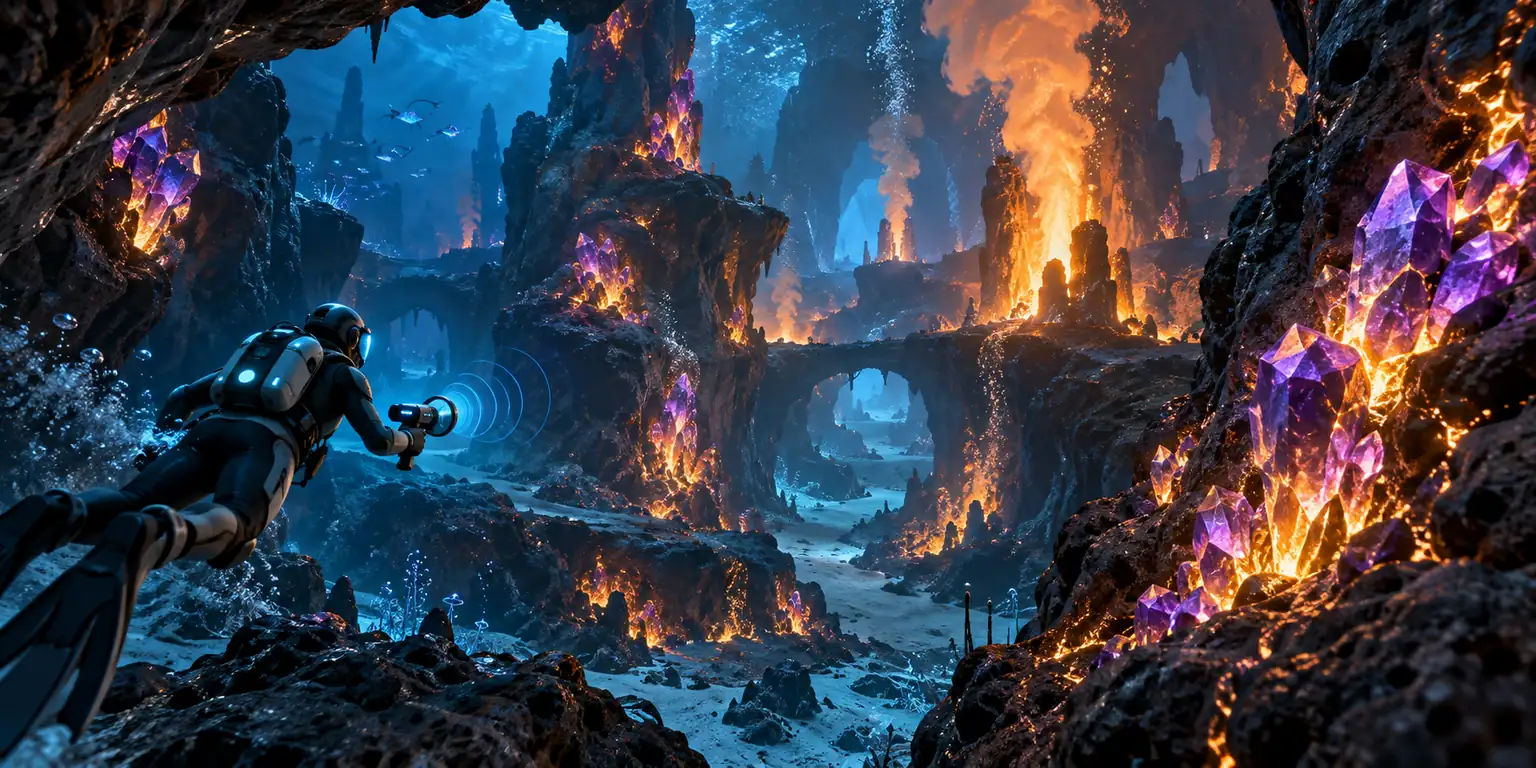
Large deposits inside the jaw are close to moving tendons and an acid-filled closing hazard. Bring a Sonic Resonator, keep an oxygen reserve, brace against a wall, and leave as soon as the drop is collected.
Move east to southeast for hot caves
For a repeatable route, travel about 350–400 m east to southeast toward the hot-vent area and look for caves near 200 m depth. GameWith recommends unlocking Heat Tolerance before making this a regular farming trip.
Choose the return line before mining
Memorize the entrance and one wall shape. Heat and oxygen warnings are easy to miss, so set one goal and leave before the inventory is full.
Steam describes Subnautica 2 as Early Access with more biomes, creatures, and craftables planned. These directions reflect guides checked on October 24, 2026, and are route references rather than permanent coordinates.
Deposit identification
How to avoid missing a lithium deposit
Lithium is not always a small shallow pickup. It appears near hazards and large mineral chunks. Sweep walls, ledges, and landmarks in a consistent order instead of searching the floor randomly.
| Clue | What it means | Best action |
|---|---|---|
| Table and shell near the colony | Reported free first piece | Check the wreckage before entering the Great Jaw |
| Large chunk in a hot cave | Mining target that cannot be punched | Equip the Sonic Resonator |
| Thermal vents and orange glow | Heat damage is nearby | Confirm Heat Tolerance and oxygen reserve |
| Cave wall ledges | Nodes can sit outside your forward view | Use a light and sweep the wall clockwise |
| An empty familiar cave | Harvested node or changed build | Check the neighboring cave and revisit after an update |

Mining steps
Mine lithium safely with a Sonic Resonator
Finding the cave is half the job. Manage heat, oxygen, and the Great Jaw hazard separately. A short extraction loop is safer than clearing every deposit in one dive.
1. Put the tool on your hotbar
Unlock the Sonic Resonator blueprint, craft it with a working station, and test the tool at base. Do not spend your oxygen crafting at the cave entrance.
2. Check Heat Tolerance first
GameWith and Steam Community treat Heat Tolerance as the safe gate for repeated hot-cave runs. Without it, follow the adaptation route before farming lithium.
3. Brace against a wall before firing
The Resonator can move you sideways. A wall behind you reduces recoil into a vent or Great Jaw tendons. Fire, collect the drop, and retreat.
4. Aim for one or two nodes per dive
Community reports describe small yields per node, but the exact amount can vary by build. Count what you need and return before the oxygen alarm becomes an emergency.
5. Decide the recipe at base
Once home, choose between Plasteel, a Portable Oxygen Generator, or the next depth upgrade. Store any spare lithium instead of spending it before the next blueprint is clear.
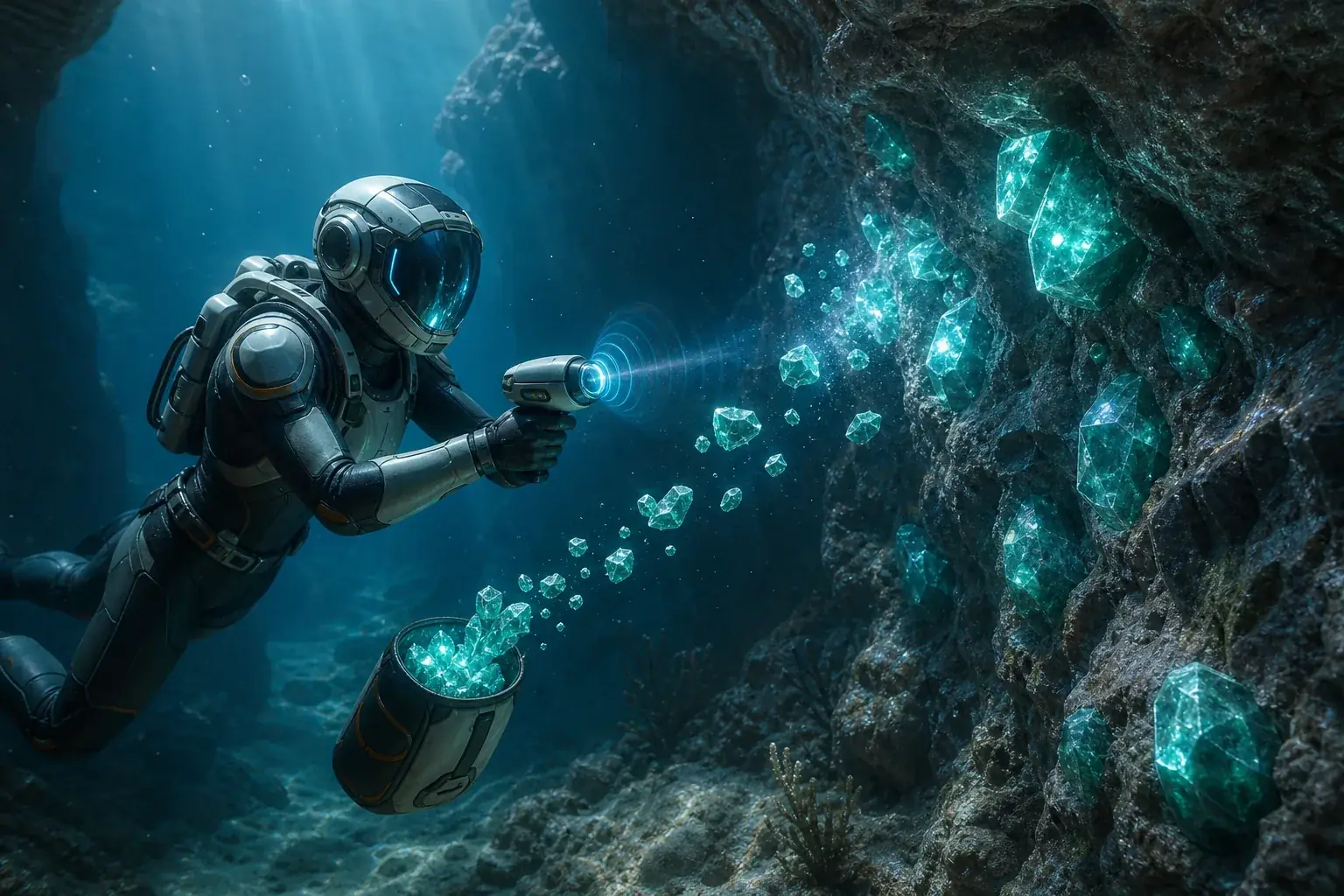
Guides state that large lithium chunks cannot be collected by hand. Distinguish the free colony pickup from a mining node. If no interaction appears, check the tool, aim point, and current patch.
Preparation
What to bring before entering the hot caves
A location guide helps only if you return with the resource. Fill food and water, check batteries, and leave space to keep the lithium.
Uses
What is lithium used for? Prioritize depth and oxygen
When lithium is scarce, spend it on upgrades that extend your next dive. Check the recipe currently shown by your stations because Early Access materials and quantities can change.
Plasteel Ingot
Lithium combines with titanium in the intermediate material reported by current guides. It feeds deeper equipment and vehicle progression, so it is usually the first priority.
High Capacity Air Tank
The Steam Community guide lists Plasteel as the route to a High Capacity Air Tank that raises oxygen from 75 to 120 seconds. Verify the current station and numbers in your build before crafting.
Portable Oxygen Generator
Japanese guides also list a direct lithium recipe for a Portable Oxygen Generator. It can help with long cave runs, but it may be sensible to finish a depth upgrade first.
A small reserve
Keep a spare in storage when a patch may change recipes. In co-op, label shared lithium separately from the player reserve so a teammate does not spend the next upgrade by accident.
Recipes and priorities
Use a recipe checklist, not a fixed promise
The table below summarizes reports checked on October 24, 2026. Treat it as a verification list. When a guide and your current Fabricator disagree, the in-game recipe is the source of truth.
| Item | Likely station | Reported materials | Priority |
|---|---|---|---|
| Plasteel Ingot | Processor | 2 Titanium + 1 Lithium reported | First |
| High Capacity Air Tank | Base Fabricator | Standard Air Tank + Plasteel reported | Before deeper dives |
| Portable Oxygen Generator | Habitat Builder path | 3 Titanium + 2 Lithium reported | Long expeditions |
| Scout Ray chassis | Vehicle Crafter | Plasteel plus several advanced parts reported | Mid to late game |
If the station shows a different quantity or crafting location, follow the station. Do not copy an old material table into a live save without checking its update date.
Troubleshooting
If you cannot find or mine lithium
When the landmark looks right but the resource is missing, progression gates and tool requirements are more likely than a small navigation error. Work through these checks in order.
| Problem | Likely cause | Fix |
|---|---|---|
| No node in the hot cave | Entrance or spawn distribution changed | Use the east-southeast direction, depth, and cave shape together; check the neighboring entrance |
| No interaction prompt | No Sonic Resonator or aim is off | Hold the tool and aim at the center of the deposit |
| Heat drains health | No Heat Tolerance or a direct vent stream | Unlock the adaptation and avoid swimming through the vent itself |
| Great Jaw traps you | Tendons were touched and the closing sequence began | Stop mining and retreat toward the entrance with oxygen reserve |
| Lithium was spent too soon | Several recipes were crafted without a plan | Reserve the next depth upgrade before making optional equipment |
| Another guide shows a different place | Different update or Early Access build | Compare dates and patch notes; use distance as a guide, not a coordinate |
FAQ
Subnautica 2 lithium FAQ
Where is lithium in Subnautica 2?
Guides point to a first pickup near the Great Jaw and repeat deposits in hot caves about 350–400 m east to southeast of the Lifepod at roughly 200 m depth. Terrain can change during Early Access.
Can I collect lithium by hand?
Large lithium deposits are reported to require a Sonic Resonator. The single pickup near the ruined colony is described separately and may be collected without mining the large node.
Do I need Heat Tolerance?
It is strongly recommended before repeated hot-cave runs. Without it, the heat around vents can damage you quickly, so finish the adaptation route before farming.
How much lithium should I save?
Reserve enough for the next Plasteel and oxygen upgrade first. Decide on the Portable Oxygen Generator afterward, and use the recipe currently shown in your game for exact quantities.
Which route is more efficient?
The Great Jaw route is useful for the first piece. Heat caves are better for repeat farming after Heat Tolerance and a Sonic Resonator are ready. Choose based on risk and your available vehicle.
Why do coordinates differ between guides?
Subnautica 2 is an Early Access game, and Steam says its biomes, creatures, and craftables will expand. Check the guide date, your build, direction, and depth instead of trusting one number.