Subnautica 2 Walkthrough: Early Progression Route and Checklist
This Subnautica 2 walkthrough is built for Early Access. Instead of pretending there is one final route, it gives you a repeatable order of decisions: oxygen safety, scanning, storage, a small base, short danger-zone scouts, and post-update checks.
- Primary keywordsubnautica 2 walkthrough
- Similarweb clicksabout 7,211
- Difficulty13
Quick Answer
Build a return loop before you chase deeper water
The safest early Subnautica 2 route is not a race into the deepest biome. Start by learning how long you can stay away from a safe oxygen return, then scan everything useful, sort resources before your inventory becomes a problem, and place a small base that turns repeated dives into a predictable loop. Once that loop works, scout a dangerous route for only one objective at a time. After Adaptive Measures 1.1 or any later Early Access patch, retest the shallow loop before trusting an older video, map note, or material route.
This guide avoids heavy story spoilers. It focuses on what to check next so new players can keep discovering the ocean naturally.
Progression Route
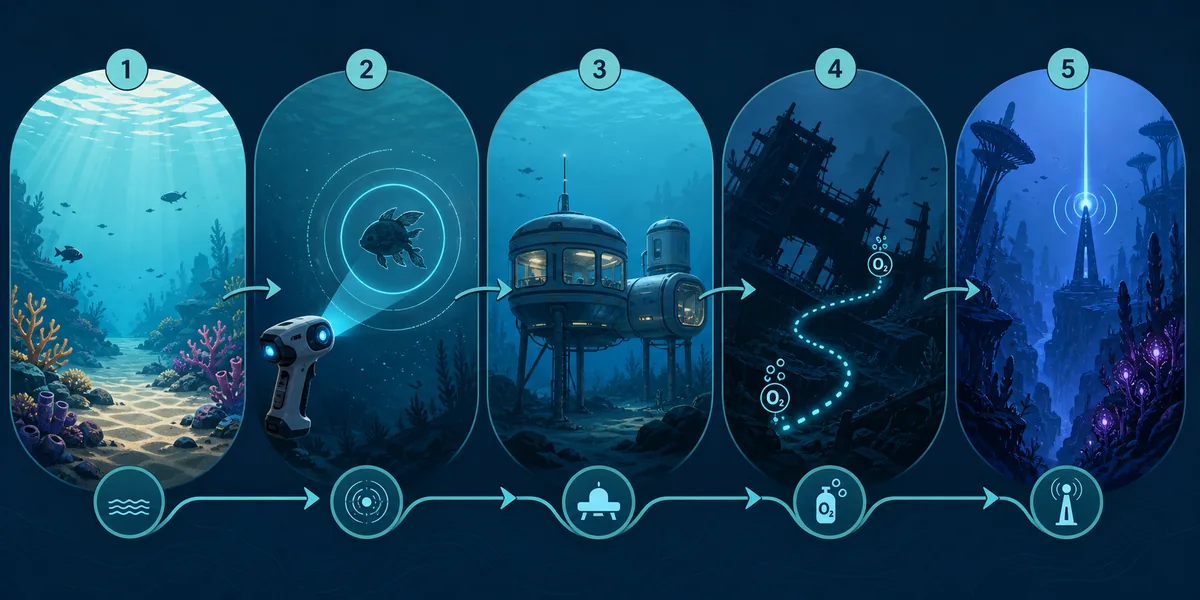
A five-step route from first dive to deeper scouting
A walkthrough is most useful when it survives balance changes. These five steps focus on conditions you can verify in your own save rather than on a brittle list of item names.
1. Learn your shallow return time
Use the first dives to learn how long you can explore before turning back. A familiar landmark, beacon, or light direction matters more than grabbing one more item at low oxygen.
2. Scan before you expand
When you find unfamiliar materials, creatures, devices, or wreck details, record the place and risk level. Skipping scans often creates confusion later when you need to return.
3. Build a small working base
Your first base does not need to be pretty. It needs oxygen recovery, crafting, charging, storage, and a clear route marker so each dive ends with less risk.
4. Scout danger routes briefly
Enter dark, deep, or hostile areas with one goal: locate an entrance, mark an oxygen limit, watch a creature pattern, or identify a resource edge. Then return.
5. Recheck after updates
Early Access patches can change balance, UI flow, performance, and co-op behavior. Treat old route notes as hypotheses until the current build proves them.
Checklist
Progression checklist: signs you are ready to move on
Use readiness conditions, not playtime alone.
| Stage | Goal | Check | Related page |
|---|---|---|---|
| 0-2h | Create a safe shallow loop | Know your return path, oxygen margin, basic materials, and night visibility. | Map guide for beacons |
| 2-4h | Scan and sort resources | Record where you found new items, threats, and storage categories. | Creatures and base guides |
| 4-7h | Run a relay base | Confirm charging, crafting, storage, and a meeting point work. | Base building guide |
| 7-10h | Scout deeper routes briefly | Mark entrances, oxygen limits, threat edges, and return beacons. | Biomes guide |
| After updates | Revalidate old notes | Test patch-sensitive details in safe water before a long dive. | Update timeline |
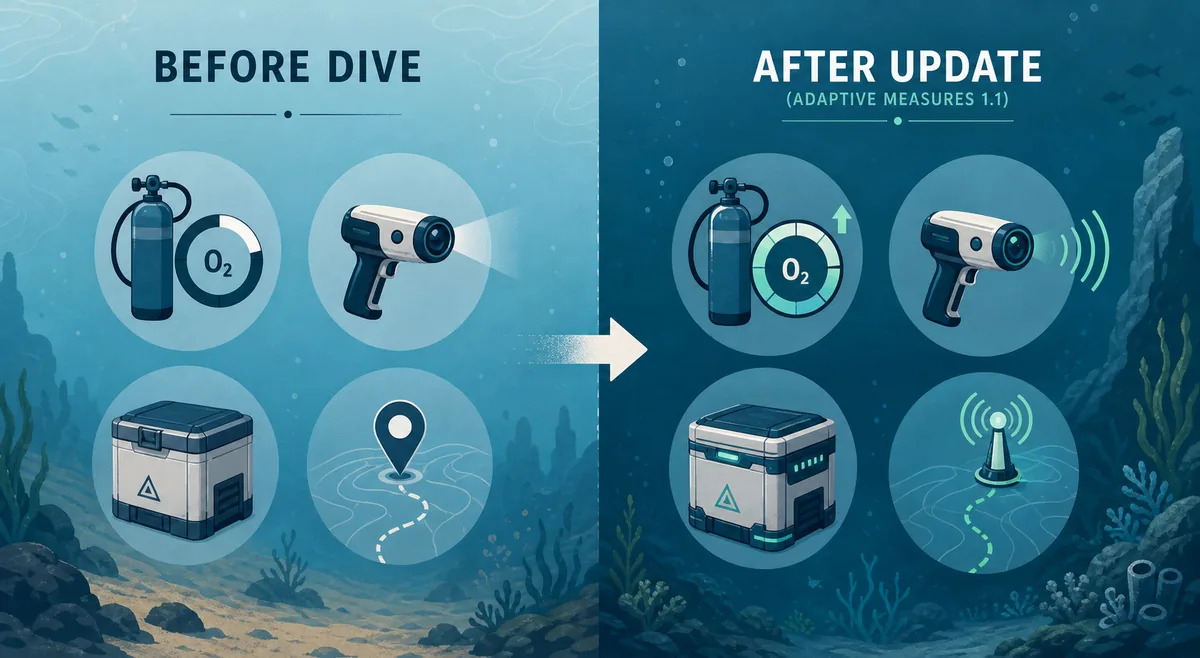
Before Dive
Four checks before every serious dive
Most failed runs start before the player leaves the base.
Pick one job
Material run, scan run, base expansion, and danger scouting are different jobs. Mixing them delays the turn-back decision.
Name the return point
Solo or co-op, decide which beacon, base, or terrain mark is home before leaving. Four players using four naming systems create unnecessary risk.
Clear inventory space
A full inventory makes every discovery expensive. Sort materials and decide where new resources will go before the dive.
Do a short post-patch test
After updates, test controls, stability, shared sessions, and key routes near safety before committing to a long expedition.
EA 1.1 Check
What Adaptive Measures 1.1 changes for walkthrough planning
Official updates are not just news. They tell you when to recheck older guide assumptions. In Early Access, stability, UI polish, balance, and co-op changes can affect the practical order of a run even when the headline does not sound like a new biome.
Update boundary checked against the official Adaptive Measures 1.1 update.
Spoiler Control
How to use a walkthrough without ruining discovery
Searchers want answers, but Subnautica 2 still works best when the ocean can surprise them.
| Need | Safe detail | Avoid |
|---|---|---|
| What to do next | Explain oxygen, scanning, base, and route-readiness conditions. | Lead with story outcomes or scripted reveals. |
| Where to go | Use beacons, depth, danger edges, and return conditions. | Show major creatures or story locations without context. |
| What to craft | Explain purpose and priority, then limit item data to verified builds. | State unverified recipes or old build costs as final. |
Next Guides
Use this walkthrough with the rest of the wiki
The route becomes stronger when it links out to map, base, creature, and update checks.
Subnautica 2 map guide
Internal
Subnautica 2 base building guide
Internal
Subnautica 2 creatures guide
Internal
Subnautica 2 update timeline
Internal
Subnautica 2 on Steam
Official
Silver location guide
Find the first silver efficiently before the next crafting bottleneck.
Subnautica 2 Alien Ruins guide
Internal
FAQ
Subnautica 2 walkthrough FAQ
What should I do first in a Subnautica 2 walkthrough?
Build a safe shallow return loop first: oxygen margin, route marker, scanning habit, basic storage, and a small base before deeper scouting.
Should I follow a story walkthrough immediately?
For a first playthrough, read objective conditions before exact story details. That keeps the route useful without spoiling every discovery.
Can I use old walkthrough videos after Adaptive Measures 1.1?
Use them as ideas, not final instructions. Retest materials, UI assumptions, co-op behavior, and routes in the current build before relying on them.
Does co-op change the walkthrough route?
The order is similar, but co-op needs shared beacon names, storage rules, return points, and roles. More players make planning more important.
Is this a complete item or story list?
No. Early Access details can change, so this page focuses on progression logic and links to deeper pages as verified data grows.