Subnautica 2 Update Timeline: Next Update, Roadmap & Patches
Use this Subnautica 2 update timeline to separate hotfixes, quality-of-life patches, co-op improvements, and larger content updates. There is no safe reason to turn a roadmap category into a made-up release date.
- Primary keywordsubnautica 2 update timeline
- IntentRoadmap and patch planning
- RiskEarly Access details can change
Quick Answer
When is the next Subnautica 2 update?
The next Subnautica 2 update should be checked through the official roadmap, patch notes, and current build rather than a rumor date. This timeline tracks the type of change players need to verify: hotfix stability, quality-of-life improvements, co-op behavior, world content, routes, resources, and creatures.
A roadmap explains direction; patch notes and an in-game check explain what changed in the build you are actually playing.
Roadmap
How to read the Subnautica 2 roadmap and next-update timeline
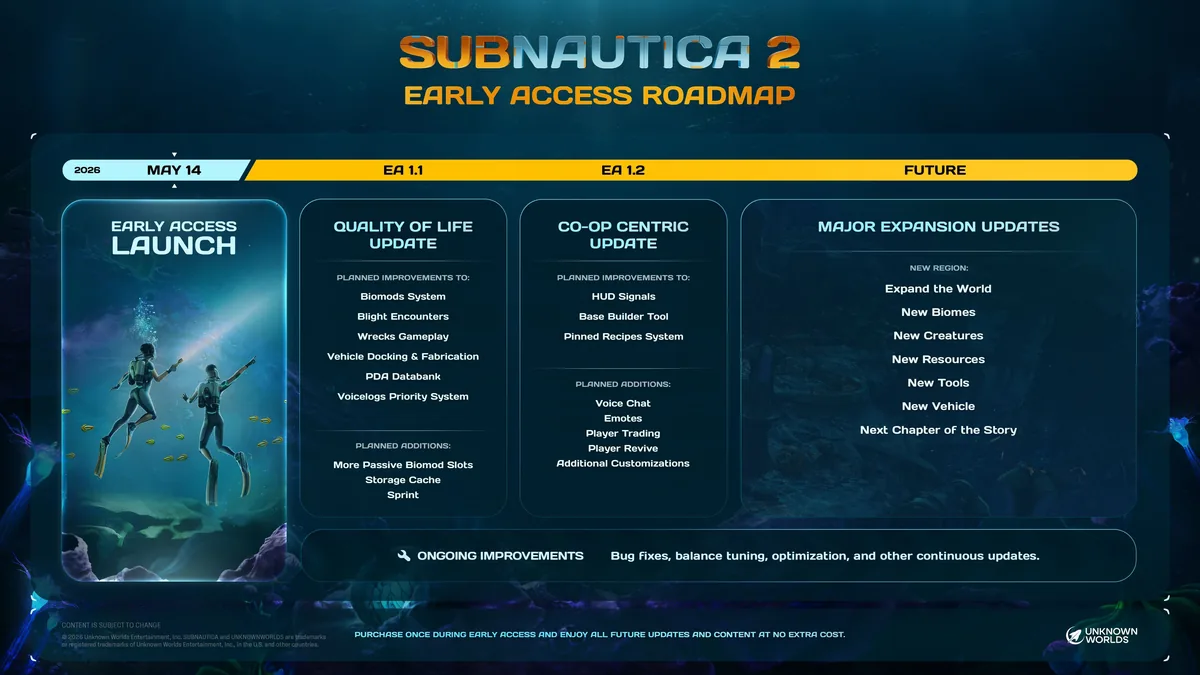
Official wording gives the order of update types more clearly than exact dates. Treat each stage as a decision point for your save, group, and guide notes.
| Stage | Official read | What it means for players | What to watch |
|---|---|---|---|
| Hotfixes | Small patches can arrive when needed. | Do not rebuild your whole base plan after every hotfix, but re-check crashes, saves, and obvious balance problems. | Build number, save issues, performance, blocking bugs |
| First improvement update | Quality-of-life fixes are the early focus. | Expect tuning around rough edges rather than a huge content wave. Good time to revisit controls, menus, stability, and basic progression. | Inventory friction, crafting flow, UI clarity, optimization |
| Second update | Co-op improvements and additions are called out. | Groups should verify host behavior, joining, reconnecting, shared bases, and whether role planning changes. | Co-op sessions, cross-platform notes, world ownership, desync |
| Larger expansion | The next big drop is described as expanding the world, biomes, creatures, resources, tools, vehicles, and story. | This is the update type most likely to change map routes, creature risk, material priority, and spoiler boundaries. | New biomes, leviathans, vehicles, resources, narrative |
Official roadmap summary based on Unknown Worlds Early Access Roadmap.
Official Media
Use the roadmap image as a version marker, not a promise of exact dates
The official roadmap image is useful because it shows the shape of Early Access communication. It does not remove the need to read patch notes. If you maintain a co-op world or a wiki route, write the update name beside each discovery so old notes can be replaced instead of silently misleading the group.
Roadmap first
Use the roadmap to decide which category of update you are reading.
Patch notes second
Use patch notes to decide whether a guide, route, or save rule changed.
In-game test third
For maps and creature behavior, verify in the current build before sharing advice.
Player Plan
What to do before and after each update
A small checklist keeps Early Access changes from breaking a long save or a shared co-op plan.
Before updating, save a note
Record your base location, active route, important beacons, and any co-op agreement before a major update.
After updating, test shallow systems first
Check storage, crafting, performance, menus, and a short route before carrying rare resources into deep water.
Re-check old wiki claims
Map labels, creature risk, and material density can become outdated faster than a release-date paragraph.
Separate spoilers from utility
When a large expansion lands, share safe routes and technical changes separately from story or creature reveals.
Patch Checks
Hotfixes matter even when they do not add new content
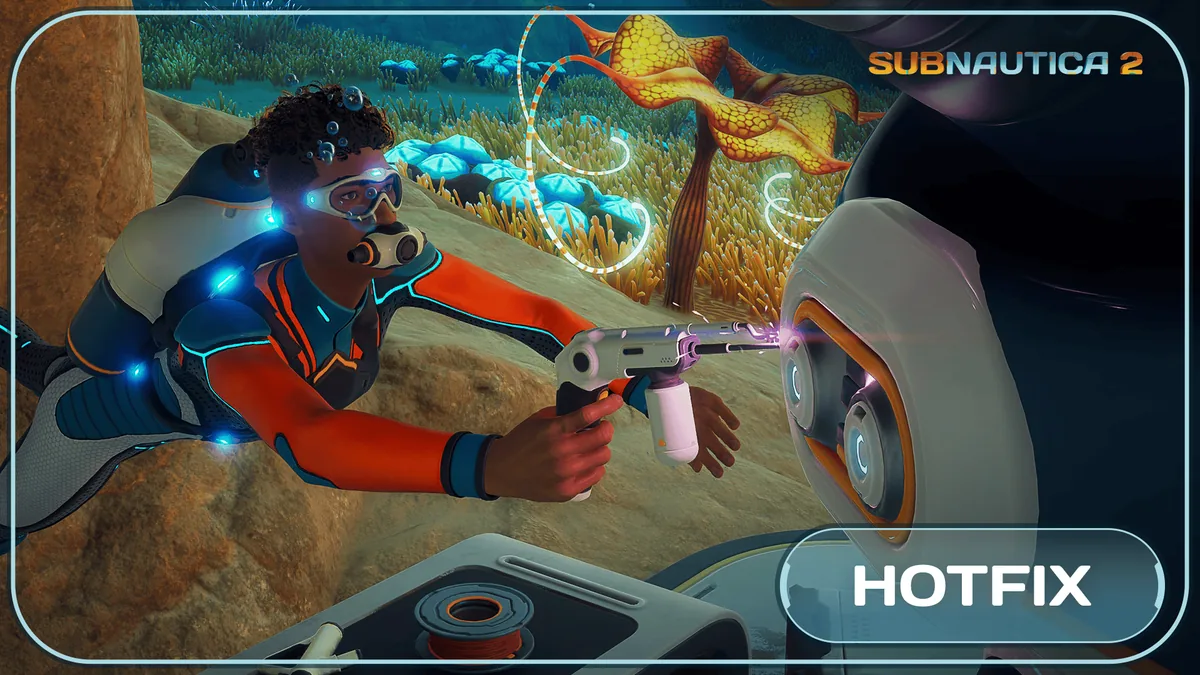
A small hotfix can change whether a session is stable enough for a long co-op dive. Treat hotfix notes as technical readiness checks: saves, crashes, progression blockers, UI bugs, and performance should be verified before planning a deep route.
Content Watch
The big updates are where map and creature guides change most
The official roadmap language around world expansion is the signal to watch for this site. New biomes can change map priority, new creatures can change risk ratings, new resources can change crafting order, and vehicles can change which bases are practical. If a page says a route is safe, that claim should be tied to the build where it was checked.
Next Guides
Connect the roadmap to the guides that will change
Roadmap updates are most useful when they tell you which guide needs re-checking next.
Subnautica 2 interactive map guide
Internal
Subnautica 2 Patch Notes
Internal
Subnautica 2 Creatures and Leviathans Guide
Internal
Subnautica 2 Co-op Guide
Internal
Unknown Worlds Roadmap
Official
FAQ
Subnautica 2 update timeline FAQ
When is the next Subnautica 2 update?
Do not treat a rumor or a broad roadmap category as a confirmed date. Check the latest official roadmap and patch notes, then verify the build before changing a long save or shared route.
What does the Subnautica 2 update timeline track?
It separates hotfixes, quality-of-life updates, co-op improvements, and larger world-content updates so you know which guides, saves, routes, or settings need a re-check.
Is there a fixed Subnautica 2 update schedule?
A roadmap can show the order or focus of update types, but it should not be read as a guaranteed calendar unless the developer publishes a specific date.
What should I check after a Subnautica 2 update?
Check saves, crashes, performance, crafting, map routes, creature behavior, resources, co-op joining, and any guide claim that depends on the current build.