Subnautica 2 Biomes Guide
Use this Subnautica 2 biomes guide to read each region as a survival decision: where to gather first, when to place beacons, how to judge cave edges, and why deep water should be mapped before it becomes a one-way trip.
- Primary keywordSubnautica 2 biomes
- Best useRoutes, resources, base planning
- Update riskEarly Access biome changes

Quick Answer
Think of Biomes as Route Problems, Not Just Pretty Zones
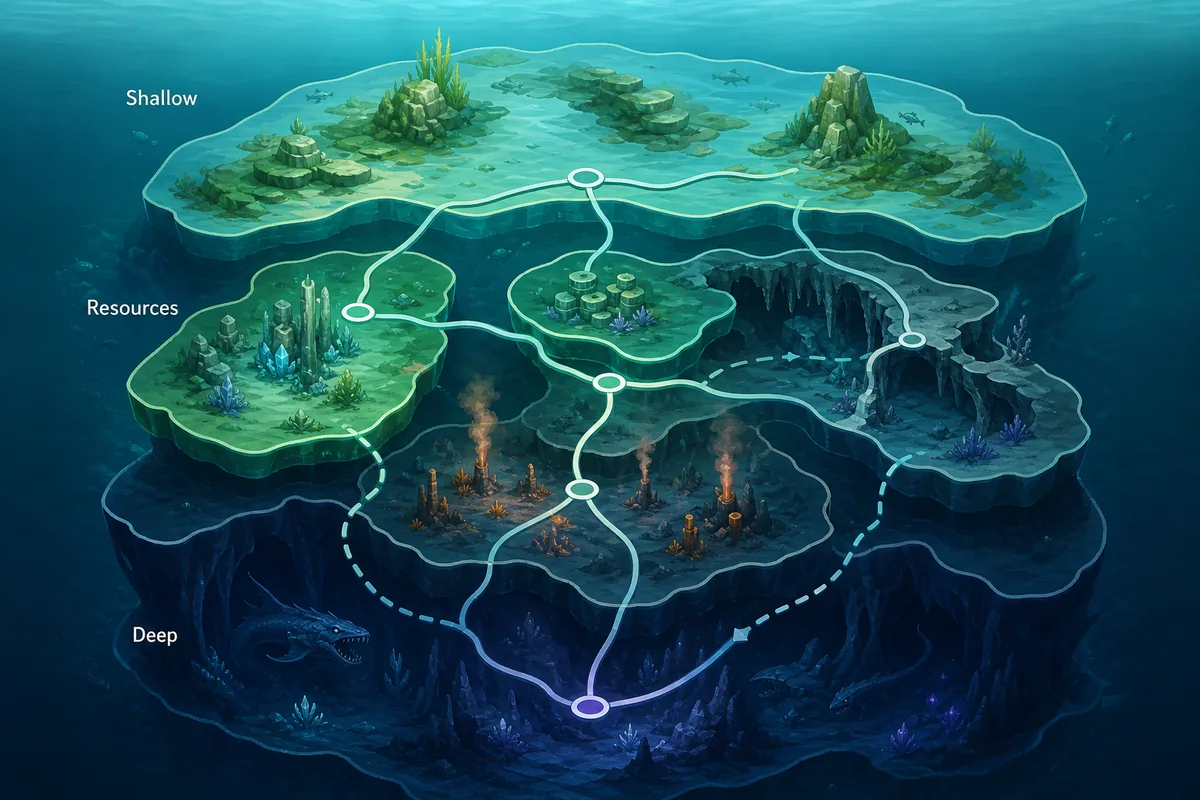
Subnautica 2 biomes should be read by what they do to your dive. A safe shallow area teaches oxygen timing and basic resources. A resource pocket tempts you to stay longer than planned. A cave edge asks whether you have a visible exit. A deep biome tests beacon discipline, power, storage, food, and whether your base network can support the return trip. Because the game is in Early Access, exact biome names, resource density, and danger levels can change, so this guide focuses on repeatable decisions instead of pretending every location is final.
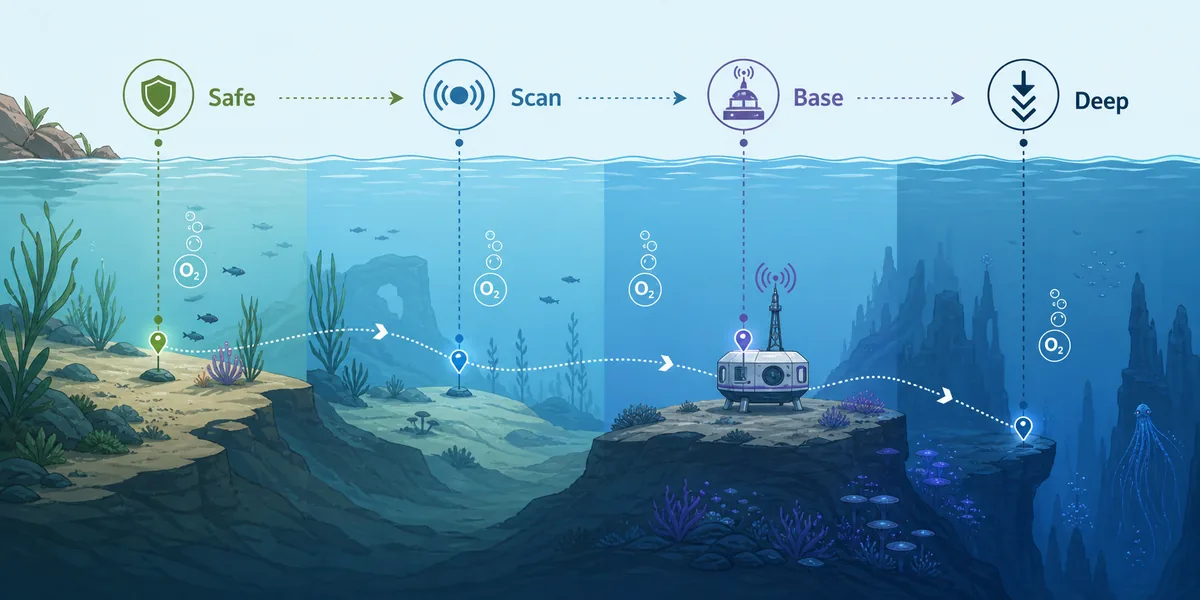
Scout from the edge, mark what matters, leave before oxygen pressure controls the decision, then return with the right tool or base relay.
Biome Types
How to Classify Subnautica 2 Biomes Before the Final Map Is Stable
Searches for a biome list usually hide a more useful question: how should you behave when a new region opens up?
| Biome type | What it means | How to play it |
|---|---|---|
| Safe shallows and starter water | Low-pressure space for oxygen timing, scanning practice, first materials, and return-route habits. | Build your routine here: surface timing, landmark memory, short loops, and one clear storage habit. |
| Resource pockets | Useful materials grouped near mild creature pressure, narrow terrain, or visibility changes. | Collect in loops, do not overstay, and mark the pocket if it supports crafting or upgrades. |
| Cave edges and tunnels | High information value but poor escape margin, especially when the path bends away from light. | Enter with a full oxygen margin, face the exit before scanning, and leave breadcrumbs with beacons or landmarks. |
| Thermal, vent, or power candidates | Possible base-power value and route anchors if the area is stable enough to revisit. | Scout first, then decide whether it can support a relay base without forcing repeated dangerous commutes. |
| Deep biome boundaries | The edge between curiosity and real danger: larger creatures, longer return times, and higher tool demands. | Treat first contact as mapping. Mark the boundary, retreat, and return with mobility, repair, and storage plans. |
For live product wording and Early Access status, verify the official Steam listing.
Route Matrix
Build a Route Matrix Before Chasing Every Biome Name
A good route matrix connects biome type, reward, threat, and retreat. It prevents the common mistake of turning a promising resource run into an emergency because the player stayed for one more scan. The matrix also keeps co-op groups aligned: one player scouts, one watches oxygen and creature movement, and one marks the exit or relay base.
Reward
What does this biome actually give you: material density, fragments, base power, story access, or safer travel?
Threat
The threat can be a creature, low visibility, a cave bend, a long return line, or inventory greed.
Retreat
Every useful biome needs a named exit. If you cannot describe the return path, you are not ready to keep exploring.
Repeat value
A one-time scan zone and a repeat farming route should not be treated the same. Repeat routes deserve stronger beacon names and nearby storage.
Progression
A Safer Biome Progression Flow for the First Hours
You do not need the full map to progress. You need a repeatable order that turns unknown water into controlled routes.
Stabilize the shallow loop
Learn the first safe return route, gather basic resources, and avoid spending oxygen on long uncertain swims.
Scan the nearest resource edge
Look for fragments, material pockets, and mild creature pressure while keeping the starter zone behind you.
Place a relay base or beacon line
When a route becomes repeatable, add storage, power, or clear beacon names so the next trip starts with less risk.
Touch the deep boundary and leave
The first deep-biome visit should identify entrances, danger, and rewards. The serious dive comes after preparation.
Resource Reading
What Biomes Tell You About Materials and Base Sites
Biome planning becomes useful when you connect each region to crafting, power, and repeat travel instead of treating it as a screenshot destination.
Materials follow risk
When a material appears near low visibility or territorial creatures, the real cost includes oxygen, batteries, and return time.
Base sites need exits
A beautiful base location is weak if it has only one confusing path home. Favor sites with visible landmarks and multiple safe approaches.
Creature pressure changes the route
The same resource can be easy or dangerous depending on patrol paths, sound cues, and how long inventory management keeps you exposed.
Co-op needs shared labels
In multiplayer, beacon names should describe purpose and danger, such as cave edge materials or deep route return, not private shorthand.
Checklist
Biome Entry Checklist
Run this quick check before treating any new region as safe or repeatable.
| Stage | Check | Why it matters |
|---|---|---|
| Before entry | Oxygen margin, battery charge, food/water, and a visible exit. | Most bad biome dives fail before the player realizes the route is too long. |
| First scan | Depth, light, creature sound, resource density, and cave bends. | These signals tell you whether the region is for quick scouting or repeat farming. |
| Marker decision | Beacon name, base relay need, and whether the route deserves storage nearby. | A useful biome should become easier on the second visit, not equally confusing. |
| After patch | Recheck resource density, creature behavior, and route safety after meaningful updates. | Early Access can change the practical value of a biome even when its visual identity stays familiar. |
Early Access
Biome Details That Can Change During Early Access
The page answers the current search intent without pretending that every future zone, name, and resource table is locked.
Names and boundaries
Official biome names may be introduced, renamed, or clarified. Use current in-game labels and official updates when exact naming matters.
Resource density
Patches can shift which areas are worth farming. Keep route advice tied to observed reward and travel cost, not only an old map image.
Creature behavior
A biome can become more or less dangerous if creature aggression, pathing, or spawn density changes.
Map tools and spoilers
Interactive maps can help later, but first-time players should avoid full spoilers until they have built safe route habits.
Related Guides
Connect Biomes to the Rest of Your Survival Plan
Biome planning works best when it is linked with route mapping, creature risk, bases, and system readiness.
Subnautica 2 map route guide
Internal
Subnautica 2 creatures and leviathans guide
Internal
Subnautica 2 base building guide
Internal
Subnautica 2 on Steam
Official
FAQ
Subnautica 2 Biomes FAQ
What are the main Subnautica 2 biomes?
Exact biome names and boundaries should be verified in the current Early Access build. For planning, classify regions by safe starter water, resource pockets, cave edges, power candidates, and deep danger boundaries.
Is there a full Subnautica 2 biome map?
A complete map can be useful later, but early players should first build routes with beacons, visible exits, and safe return loops. Full map tools may also become outdated after updates.
Which biome should beginners explore first?
Start with the safest shallow loop, then move to the nearest resource edge. Do not treat a deeper biome as repeatable until you know its exit, creature pressure, and oxygen cost.
How do biomes affect base building?
Good base sites are not only scenic. They need stable access, power options, nearby resources, and a safe route back to important biomes.
Can Early Access updates change biome advice?
Yes. Resource density, creature behavior, cave routes, and official biome labels can change, so recheck major updates before relying on old route advice.
How is this different from the map guide?
The map guide focuses on navigation and route systems. This page focuses on reading biome types, reward/risk decisions, resource logic, and progression habits.